Source Adjustable Medical Monitor Arm for Hospital School Office
Find 30 adjustable medical monitor arms with tilt, swivel, and rotation capabilities for hospital, school, and office environments. Buyers can compare screen sizes, VESA standards, and loading capacities to select the right desk mount solution.
Key considerations
Products List




Comprehensive Sourcing Guide
Strategic Sourcing Guide for Adjustable Medical Monitor Arms
Understanding Technical Specifications and Mechanical Capabilities
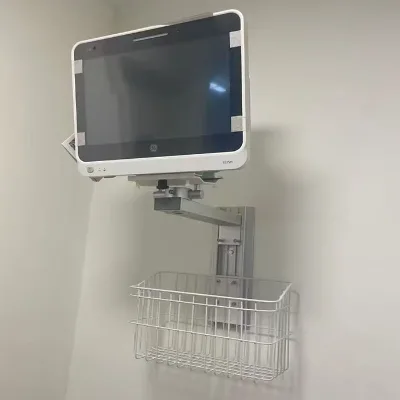
When sourcing an adjustable medical monitor arm, the primary focus must be on mechanical precision, load-bearing capacity, and the range of motion required for clinical environments. The market offers a variety of configurations, but buyers must distinguish between general office solutions and those designed for the rigorous demands of healthcare. Based on available product data, a critical technical differentiator is the tilt and rotation capability. Specific models in the current supply landscape demonstrate a tilt degree range of + / - 25 degrees, while others offer a more expansive + / - 50 degrees. For medical applications where viewing angles must be optimized for patient safety and surgeon visibility, the ability to achieve a screen tilt of -45 to 90 degrees is a significant functional advantage. Furthermore, the swivel and rotation capabilities are essential for multi-user scenarios; observed specifications include a screen swivel of -90 to 90 degrees and a full rotation range of -180 to 180 degrees.
The mounting method is another fundamental specification that dictates installation flexibility. While some units are designed for desk mounting, high-end medical solutions often support both desktop clamp and grommet installation. This versatility allows for secure attachment to various medical cart designs, including those with curved edges or glass surfaces. The maximum VESA standard supported by these arms is a crucial compatibility factor. While some units are limited to a 100x100mm standard, others accommodate both 75x75mm and 100x100mm patterns, ensuring compatibility with a broader range of monitor models. The loading capacity is equally vital; observed data indicates a load range of 2-15kgs, which must be verified against the specific weight of the monitors intended for use. Additionally, the physical dimensions of the arm, such as a height range of 197-545mm, determine the vertical adjustability required for ergonomic positioning. The screen size compatibility also varies, with some models supporting screens from 13 to 25 inches, while others extend to 14-32 inches or even 13-43 inches. Buyers must ensure the selected arm matches the exact screen size and weight of their hardware to prevent mechanical failure.
Compliance, Certification, and Regulatory Standards
In the medical sector, compliance is not merely a preference but a mandatory requirement for procurement. The regulatory landscape for medical devices is stringent, and the sourcing guide must emphasize the verification of specific certifications. While general office equipment may only require standard safety marks, medical monitor arms often fall under the category of medical devices or accessories. Observed product data highlights the presence of FDA certification for specific models, which is a critical indicator of compliance for use in regulated healthcare environments. Additionally, standards such as ISO and CE are frequently cited in the supply chain, with some products explicitly stating adherence to ISO and CE standards. However, buyers must exercise caution; the presence of a certification label on a product listing does not guarantee that every unit in a batch meets the standard. It is imperative to request valid, current certificates from the supplier and verify them against the issuing authority's database.
The distinction between general commercial products and medical-grade equipment is often defined by the regulatory type. For instance, some products are classified under specific medical device regulatory types, such as a Sphygmometer, indicating a specialized function. When sourcing an adjustable medical monitor arm, the buyer should verify if the product is intended for "External Use" or if it requires specific sterilization or infection control properties. The material composition also plays a role in compliance; aluminum is a common material cited in product specifications, offering a balance of durability and weight. However, the surface finish and coating must be resistant to harsh cleaning agents used in hospitals. Buyers should not rely on general certification claims like RoHS or CE found in background data without specific product confirmation. Instead, the procurement process must include a request for the specific test reports and certification documents relevant to the intended medical application. The origin of the product, such as Zhejiang or Jiangsu in China, may influence the regulatory framework applied, but the final compliance status depends on the specific product model and its intended market.
Cost Drivers and Pricing Structures
The pricing of adjustable medical monitor arms is influenced by a complex interplay of factors, including material quality, mechanical complexity, and certification status. The observed price range in the market spans from $2.8 to $875 USD, a wide disparity that reflects the difference between basic desktop mounts and specialized medical-grade articulating arms. The lower end of the spectrum typically corresponds to simpler designs with limited adjustability, such as a single monitor support with basic tilt functions. In contrast, the higher price points are associated with arms featuring dual monitor support, extensive rotation ranges, and robust loading capacities. The inclusion of certifications like FDA or ISO compliance often adds to the cost, as it involves rigorous testing and quality assurance processes.
Another significant cost driver is the customization level. Products offering customizable logos, packaging, and specific color options, such as "Panda" or standard black, may carry a premium. The packaging method also impacts the final cost; units shipped in colorful boxes versus those in reinforced cartons with specific inner box dimensions (e.g., 432287115mm) will have different logistics and material costs. The Minimum Order Quantity (MOQ) is a critical financial consideration, with observed ranges spanning from 1 to 2000 units. Small orders may incur higher per-unit costs due to setup fees and limited economies of scale, while bulk orders can significantly reduce the unit price. Buyers should also consider the sample availability; while samples are allowed, the cost of obtaining a sample for testing must be factored into the initial budget. The volume of the product, indicated by standards like 0.07CBM per pack, affects shipping costs, which can be a substantial portion of the total landed cost for international buyers. Understanding these variables is essential for accurate budgeting and negotiating favorable terms with suppliers.
Typical Applications and Usage Environments
The versatility of adjustable medical monitor arms allows them to be deployed across a wide spectrum of healthcare and institutional settings. The observed usage data indicates suitability for schools, hospitals, homes, offices, and hotels. In a hospital environment, these arms are essential for patient monitoring, surgical navigation, and diagnostic imaging. The ability to adjust the screen to -45 to 90 degrees ensures that medical staff can view critical data from various angles without straining their necks or backs, which is crucial during long shifts. The dual-monitor capability, found in specific models, is particularly valuable in operating rooms or intensive care units where multiple data streams need to be displayed simultaneously.
Beyond acute care settings, these arms are also utilized in educational institutions and home care environments. In schools, they facilitate interactive learning and digital classrooms, while in home settings, they provide ergonomic solutions for telemedicine and remote work. The "Classic" style and "Folded" design options suggest that space-saving features are important for environments with limited desk real estate. The installation method, whether desk mount or clamp, allows for flexible deployment in existing furniture setups without the need for permanent modifications. The material choice, such as aluminum, ensures that the arms can withstand the frequent adjustments and potential impacts common in busy medical facilities. Furthermore, the color options, including black and panda, allow for aesthetic integration into various interior designs, from sterile clinical rooms to more relaxed home offices. The specific usage mode, such as "For External Use," highlights the adaptability of these devices for portable medical equipment or mobile carts.
Supplier Evaluation and Verification Protocols
Evaluating a supplier for medical monitor arms requires a rigorous due diligence process that goes beyond surface-level product listings. Buyers must verify the supplier's ability to provide consistent quality and adhere to regulatory standards. The origin of the product, whether from Zhejiang or Jiangsu, China, provides a geographical context but does not guarantee quality. Instead, the focus should be on the supplier's track record, production capacity, and quality management systems. The availability of samples is a key indicator of a supplier's confidence in their product; buyers should always request samples to test the mechanical stability, finish quality, and ease of adjustment.
When evaluating suppliers, it is crucial to check for specific product models and their associated specifications. For example, models like CT-LCD-DS1702A or WS-Y100-B03 may have distinct features that align with specific procurement needs. The supplier's willingness to accept customized orders, including logo placement and packaging modifications, is a strong indicator of their flexibility and customer service orientation. Buyers should also inquire about the supplier's experience with medical device regulations and their ability to provide necessary documentation, such as FDA certificates or ISO compliance reports. The production standard, such as 100x100mm or 0.07CBM, should be clearly defined in the supplier's technical documentation to avoid misunderstandings. Additionally, the supplier's response time and communication clarity are vital for managing the procurement timeline, especially when dealing with complex medical equipment.
Quality Control and Long-Term Procurement Considerations
Quality control is paramount when sourcing medical equipment, as the failure of a monitor arm can have serious consequences in a clinical setting. Buyers should implement a multi-stage quality control process that includes pre-production sample verification, in-process inspections, and final random sampling. The mechanical components, such as the tilt and swivel mechanisms, must be tested for durability and smooth operation under load. The observed loading capacity of 2-15kgs must be validated through stress testing to ensure the arm can support the monitor without sagging or failing over time. The finish and coating should be tested for resistance to chemicals and abrasion, which are common in hospital cleaning protocols.
Long-term procurement considerations involve establishing a reliable supply chain that can meet future demand without compromising quality. Buyers should negotiate clear terms regarding lead times, warranty periods, and after-sales support. The packaging standards, such as the use of colorful boxes or reinforced cartons, should be designed to protect the product during transit and storage. The availability of spare parts and the supplier's ability to provide technical support are also critical for maintaining the operational continuity of medical facilities. By focusing on these aspects, buyers can ensure that their investment in adjustable medical monitor arms provides long-term value and reliability. The procurement strategy should also include regular reviews of supplier performance and market trends to adapt to evolving medical technology and regulatory requirements.
FAQs
What certifications are available for adjustable medical monitor arms?
Some models hold FDA certification and comply with ISO and CE standards. Buyers must verify specific certificates for each product model rather than assuming all units meet these requirements.
Which mounting methods support adjustable medical monitor arms?
Available methods include desk mounting, desktop clamps, and grommet installation. This versatility allows secure attachment to various medical cart designs and curved surfaces.
Can adjustable medical monitor arms support dual monitor setups?
Yes, specific models are designed to support two monitors simultaneously. Other configurations are available for single monitor setups depending on the product model selected.
What is the maximum VESA standard supported by these arms?
The arms support VESA standards up to 100x100mm, with some models accommodating both 75x75mm and 100x100mm patterns. This ensures compatibility with a wide range of monitor sizes.
How much weight can adjustable medical monitor arms hold?
The loading capacity ranges from 2 to 15 kilograms depending on the specific model. Users must verify the arm's capacity against the weight of their intended monitors.
What customization options are available for these monitor arms?
Customization includes logo acceptance, customized packaging, and color options like black or panda. Buyers can request specific packaging dimensions and branding details from suppliers.